My once a month crazy habit

It’s human nature to want what we can’t have. Usually when we get what we want the value of that which we desired is diminished in our eyes. The phrase “familiarity breeds contempt” comes to mind.

Within the first week of every month, when I’m at a grocery store or drug store (preferably CVS) I look at the candy aisle. I always try to make sure that there are not other Torah observant Jews around (due to Moris Eyin issues) and pick up a package of Skittles. I quickly turn it over and look toward the end of the ingredient list to see if it has an OU and then put it back with it’s friends on the shelf.

The rumor was, ever since M&M’s got an OU in the mid 90s, that the OU would pursue certification for Skittles in the future. There are very few foods, if any, that I miss after keeping kosher almost 18 years (over half my life, which is pretty cool). I was, actually, never a big fan of Skittles. Yet I check.
I guess, as I think and write about this seemingly-trivial-issue it boils down, like a good pot of Shabbos soup, to two things:

1) Do I really miss something that, in the big scheme of things, plays no really role in my Avodas Hashem?

2) Hey, I’ve survived this long without it. That’s not too shabby.

Both of these items might become future posting material, as in my mind, they contain hashkafic concepts that I sometime forget about.

Jewish Rock 101


Note: The following was sent to me by Ruby Harris. While we are not related, we do share the same neighborhood.

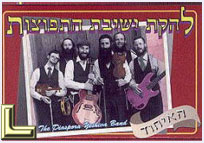
The Inventors of Jewish Rock,one of the first modern Klezmer bands, Innovators at the turning point in the history of Jewish music,The band that started it all,The Diaspora Yeshiva Band

By Ruby Harris, Original member on Violin, Mandolin, Guitar, Harmonica, Vocals

Jewish music history can be divided into two periods: BD and AD, which stands for Before and After the Diaspora Yeshiva Band. The music before us was so different than the music after us. So many innovations and musical arrangements used daily in the Jewish music world are direct products of the influence of this band at the turning point. Most of your favorite music today is somehow a derivative of the DYB, the band that started it all. Several of today’s hottest acts are actually either composed of members of the original DYB or their children, and of course countless students, followers, and fans.

But it wasn’t always so…

If Rock n’ Roll was born in the 50s, and the 60s saw it be fruitful and multiply, then the 70s saw an interesting phenomenon when some of these musicians began to find that old time religion, and in the Holy Land of Israel in particular some of them gathered in a very musical and spiritual place on Mt. Zion in Jerusalem, and formed a band that was called “The Diaspora Yeshiva Band”. From approximately 1976 to 1986 3 things occurred: 1) they became one of the most popular bands in Jewish music. 2) The Jewish music before this time was about to go through what can only be described as the same basic transformation that the world of popular music went through with the Beatles, and 3) The old Jewish/Yiddish music was re-discovered and became amalgamated with new worlds of music. Innovations, emulations, and revelations were suddenly overtaking the Jewish world, and the DYB can be viewed as either credited with or guilty of manifesting this transformation. Today of course, most Jewish music has some rock sounds incorporated within, but back then it was unheard of, and such a thing bordered on the taboo.

Almost parallel to the first Rock’n Roll stars and their society, the union of Rock with Jews didn’t come so smoothly, it was a rocky road at first, particularly in the years roughly from 1973-1982. Jewish music didn’t catch up with the rest of the world so fast. I remember one time we were doing a concert at the Jerusalem Theater and after the show someone comes up to us and emotionally expressed his disapproval of the Holy words being fused with rock sounds (Elvis and Ray Charles got the same reaction).

Also in that early gestation period, there was the sensation that the DYB caused at the Chassidic Song Festival. We won first place 2 years in a row, thus causing the voting committee to re-write the rules so that we don’t take over…

The great Rabbi Shlomo Carlebach was also a victim, in those years and even earlier, of the old problem of being an innovator: the public simply was not ready. But we’re in good company-Mozart, Benny Goodman, and Bob Dylan also met with resistance until the world came around. We played many concerts with Shlomo.

Klezmer? The old Hebrew-Yiddish word had not yet even begun to be re-discovered and re-used yet, and we were continuously toggling with what to call our new genre: Yiddish Jazz? Chassidic Rock? Country & Eastern Music, Rhythm & Jews, Jewgrass, who knows? We took an old Jewish wedding standard, added a rhythm section, a hot clarinet, a seething guitar solo, a devil-went-down-to-Georgia-type fiddle breakdown, and some extended Kabalistic jams and it wasn’t long before the listening public took notice that that old Jewish music wasn’t so out of date after all. I remember a phone call and a visit from David Grey, one of the members of the new-genre group “The Klezmorim”, who came to my home in Jerusalem for an interview, plus, an early wedding involved sitting-in for some tunes at the old legendary New York restaurant Lou G. Seigles with Hankus Netsky and Don Byron of the Klezmer Conservatory Band, both bands being the first of the new “klezmer” bands in those pre-natal years. At a concert in Philadelphia, our opening act was the newly formed Kapelye with Henry Sapoznik. An early meeting with Andy Statman also found him asking me all about Jewish music as well as Jewish philosophy, quite some time before he “returned” to the fold. I convinced him to check out some Breslov music, and a few years later we found ourselves on stage together at a sold-out concert at the Metropolitan Opera House. He had quite a beard by then…

While Led Zeppelin, Jethro Tull, Fairport Convention and Jefferson Airplane were taking old English & Irish nigguns (folk melodies) and suffusing them with the blues, we were doing the same thing in this post-Woodstock world with Jewish standards Dreydle dreydle, Dayenu, and Chasen Kala Mazal Tov. Plus, as with our favorite beloved Anglo/American rock heroes, we were writing and performing our own originals, one of which can almost be called the Official Anthem of the Baal Tshuva (returnee) Movement, “Malchutcha”. We had some fun, oy vey, doing a Hendrixian Hatikva, the Shma ala Doors (hey, the mezuza goes on the Doors!), a David Melech Squaredance, a liturgical Beatles medley, endless Grateful Dead-style jams on Ketzad Merakdim, or Gesher Tzar Meod per Santana, and so on. Another funny thing, at first, as antique ‘78’ records of Bill Monroe, Howlin’ Wolf and Jellyroll Morton started catching our interest among the Jolson, Cantor, and Sophie Tuckers in our grandfather’s attic, we started paying attention to the funny green-labeled Yiddish ones too, that revealed a virtually hidden and buried world of dusty stars like Naftulie Brandwine, V. Belf, Dave Tarras, Abe Schwartz and Aaron Lebedeff, now looked at as the patriarchs of Klezmer recordings.

The Torah predicted that in the days before the Moshiach, there would be a return of the exiles, a great influx of converts, and a movement of returnees to Judaism. I’m happy to say I was there at the beginning of that movement, and the DYB provided the soundtrack. We traveled around the world playing for a remarkable cross section of the people that range from the roots to the fruits of the movement: Holocaust survivors, Israeli soldiers, Yeshiva students, Hebrew school children, Chassidic dynasties, Kibbutz & Moshav celebrations, and a thirsty generation searching for the answer.Every Saturday night we gave a now-legendary concert called “King David’s Melave Malka” post-Shabbat celebration at his actual tomb on Mt. Zion in Jerusalem, a central Biblical historic site. Once, Broadway star Pearl Baily and her husband jazz legend Louie Belson were on a pilgrimage to this site and the nearby ‘Last Supper’ room, and she just happened to be at King David’s Tomb during my wedding, and she came in and sang “Hello Dolly” to the newlywed couple. People come up to me all the time recalling those concerts and how special they were, and so many of today’s musicians tell me things like “when we first saw you guys, we decided that, hey, we could do that too!” I even recently met a mother of ten who confessed that she was about to leave Judaism altogether when at a last ditch effort she came to one of our shows and she stayed in the fold, got married, and the rest is her-story.

Before the 6 Day War, Rabbi Dr. Mordechai Goldstein started the Diaspora Yeshiva which was the first Baal Tshuva Yeshiva. The location was Mt. Zion where King David is buried (down below in ancient catacombs). When David was a young shepherd from his home town of Bethlehem just south of Jerusalem, he used to take his sheep and graze them, and where would he go? A prophet and spiritual master of the highest caliber, he naturally was attracted to the center of the universe, the Temple Mount where his son Solomon was later to build the Holy Temple. He took his Harp and composed the most famous music in history, the Psalms as he, in symbolic parallel to G-d watching over his people, shepherded his sheep daily between his home and Mt. Moriah, the Temple Mount, the place where his ancestors Abraham, Isaac, and Jacob had their prophetic revelations and grazed their flocks.His music, which is soaked into the architecture and the very earth of this location, drew people like us to David’s Holy Mt. Zion, which is the neighboring mountain to the Temple Mount. We played and sang and expressed the hope of the returning of Jerusalem, and the simcha (joy) of Torah learning. The mystical possibilities were incalculably inspiring. The music wasn’t so bad at first either, and it kept getting better, and with a few savvy people and some smart moves, we got some sound equipment and started recording, and we actually managed to not only lay down some extremely original material, but also expressed the lofty spiritual feeling of the moment.

From 1973 to 1976 can be called the early period, with many changes in personnel ranging from a few guys jamming to a big band, at which point in June of 1977 the actual “DYB” was formed and solidified, with the original 6 members being: Avraham Rosenblum on guitar, Ben Zion Solomon on fiddle and banjo, Simcha Abramson on Saxaphone and Clarinet, Ruby Harris (this writer) on Violin, Mandolin, Guitar, and Harmonica, Adam Wexler on Bass, and Gedalia Goldstein on Drums. Before and after this, many great and illustrious people came and went, such as Rabbi Moshe Shur, Chaim David, Rabbi Shimon Green, Menachem Herman, Beryl and Ted Glazer, Rabbi Yosil Rosenzweig, Yochanan Lederman, and Rabbi Tzvi Miller. We played in a 2000 year old building resembling the Cavern Club in Liverpool. Getting electricity into these Byzantine and Crusader edifices was no small endeavor. The acoustics were amazing, though.

Our history of performances is incomparable: Wartime shows for troops from Sinai to Lebanon, concerts and events for such public figures as Menachem Begin, Yitzchak Rabin, Ariel Sharon, Shimon Peres and many other VIPs and statesmen, parties and banquets with Isaac Stern, Shlomo Carlebach, Abba Eban, President Herzog, (and later President Clinton & Mayors Giulianni and Daley), an early MTV video performance and interview featured in the Bob Dylan tour with Tom Petty, and ultimately, concerts at Carnegie Hall, Avery Fisher Hall at Lincoln Center, and the Metropolitan Opera House. Somehow, Lynard Skynard’s drummer Artemis Pyle even played with us and donated his awesome drum set to the yeshiva!

The band broke up in the mid 80s and the members have all gone off in different directions, most notably: BZ Solomon does extensive recording and performances worldwide, Rabbi Shur is an executive with the Hillel Organization and also records and performs, Rabbi Green is the head of a Seminary in Jerusalem, Avraham Rosenblum keeps the Diaspora flame burning with his new band, Chaim David has become a Jewish music superstar, and I perform and record extensively in an eclectic range of styles from Jewish Rock and Klezmer to Blues, Jazz and Country, including other notable relationships, such as a series of recordings with members of the original Sun Records rhythm section, who’ve made history as players in the bands of Elvis, Johnny Cash, and Roy Orbison. Adam Wexler is a member of Reva L’Sheva, one of today’s finest Jewish rock groups, and finally, Simcha, Gedalia, Beryl, Ted, and Menachem have all advanced to the higher original goals of scholarship, spiritual mastery, and various lofty musical projects and endeavors.

But most charmingly, is the fact that many of the children of the original members of the DYB are among today’s hottest stars, as members of Soulfarm, Moshav Band, and oodles of other contemporary projects ranging from some of New York’s top wedding bands to fine art music recordings. Occasionally several of the guys get together for projects, such as 2 recent DYB reunion shows on Long Island and at the Catskills Homowack Hotel, and there are some real tasty dishes simmering in the musical kitchen. If you’re looking for the original members to perform these days, they all do so, emphasizing their newer compositions and styles, but most of the guys are still happy to give you the old tunes if you really bug ‘em. Keep listening!
———————–
Ruby Harris is an original member of the Diaspora Yeshiva Band, and since the close of that primordial period in the history of Jewish Rock, Ruby has been seen opening for Ray Charles, Marshall Tucker Band, and Little Feat, and he’s performed with Peter Yarrow, Mordechai Ben David, Buddy Miles, Avraham Fried, Pinetop Perkins, and members Jefferson Airplane, Klezmatics and Grateful Dead. He lives in West Rogers Park, Chicago and presently performs in concert, on recordings, and at someone-you-know’s wedding. His website is www.rubyharrismusic.com where, along with www.jewishjukebox.com and www.cdbaby.com, his latest CD “For Heaven’s Sake” is available, as is his CD “Almost Home”, featuring Pine Top Perkins and Sugar Blue. For recordings of any of the artists mentioned, see your local Jewish music store or look them up on line.
————————-
This article is the exclusive (copyright 2006) property of Ruby Harris www.rubyharrismusic.com

Samples of Ruby’s latest CD are available here.

Rav Hirsch on Lech Lecha

I’m a creature of habit. I say over the exact same d’var Torah for Lech Lecha every year. When I read Rav Hirsch’s commentary on the first pasuk I was hooked.

Rav Hirsh says that the addition of the pronoun lech to the verb lecha stresses the idea to “go for yourself, go your own way”, distance yourself from other things such as your family, friends and past. Hashem say to Avraham (still Avram), “Be different than your generation.”

Rav Hirsch continues to say that “every individual is directly responsible to Hashem for his personal conduct. If it becomes necessary, if the principle idolized by the majority is not the one which is truly devine, then the individual must go “alone, his own way, with Hashem”. This conviction was set by Avraham as the starting point for is own mission and that of the people to be descended from him”.”


I admit, when I read this I was 18. I was still idealistic, head-strong, ready to take on the world, and full of an explosive passion for yiddishkeit. Now, almost 36, I read Rav Hirsch and feel that way again. Torah is timeless.

This is not a blog posting

REVISED:

I once saw a great band t-shirt. The t-shirt said: THIS IS NOT A FUGAZI T-SHIRT. That was the whole shirt. IMHO this was a great marketing technique. It was a commercially non-commercial way to promote the band. Ironically, the t-shirt was not an official band produced shirt, as the band was totally against comercial marketing.

Ever since I’ve been reading blogs and, for sure since the inception of this blog, I’ve been impressed with those bloggers who post on a daily basis. I admire it and, at times, wish I had the diligence to do the same. Blogs (don’t feel bad if I don’t mention yours) such as A Simple Jew, Hirhurim, Emes Ve-Emunah, Serandez, Psycho Toddler, or BeyondBT serve up fresh postings on a daily basis. No only are the postings well written, but make one think and grow as a Jew. One of the keys to a successful blog is updated content, so I’ve been told.

Since Shabbos, I’ve taken a slight break from looking at blogs (with the exception of one blog yesterday) or posting on this one. It has little to do with lack of motivation to write (Baruch Hashem) and more to do with increasing my productivity outside the blogosphere.

Of course, in the next day or two, when I revert to looking at blogs, I’ll have a million posts on my google reader to go through, but that’s alright. To those that post daily…Kol Hakavod.

Postscript: The truth is that what I thought to be a cute title and post is really not so cute. To attempt to sensationalize my day to day life and spin it into something more than it is, is really norishkeit. As pointed out to me by a reader, this posting adds nothing to my own Avodas Hashem and is not in keeping with the themes and topics that I normally write about. To that reader, I say thanks!

Why I recommend saying "Good Shabbos"

I lead, what I think of, as a pretty regular life. So when something singular happens, it’s pretty exciting for me. As common in most communities and with groups of friends, when someone has a baby people start offering to make meals for that family (in this case, my family).

Last motzei Shabbos we got a call from our friend who was coordinating meals for us. It seems that a couple wanted to do a chessed and give us a meal. The problem was that we had no clue who they were. We didn’t recognize their names nor did our kids have anyone with the same list name in their classses. Later that night we found out the wife’s maiden name, and she claimed that we were her former NCSY advisors. I still wasn’t sure who it could be. For four days I was trying to figure out who these people were. I did know someone by the wife’s maiden name, but different first name. Last night, the mystery was solved. My wife opened the door when our guest came (I was still at work) and it was all revealed…

I try to be a friendly person, so as I walk to/from shul Shabbos morning I always say “Good Shabbos” to people I see. It makes no difference if I know them or not. As it happens, in Chicago, people say “Good Shabbos” back, too.

Apparently last Shabbos I said “Good Shabbos” to this “former NCSYer” and as she told my wife, when she got down the block she realized who I was. She figured that I was in town for a chassuna. Then she was speaking to a friend and our name came up also. Then she saw a birth announcement in one of the community emails. All of this happened over Shabbos.

It turns out that she was the NCSYer I was thinking of (it’s been almost 10 years since I’ve heard her name), but she’s going by a slightly different name these days. She and her husband moved here two years ago. What a way to reconnect with someone and all from saying, “Good Shabbos”. Try saying it, you, too, might end up with a great story of hashgacha pratis.

Harav Kalonymous Kalman Shapiro, zt"l

Today, the fourth of Cheshvon is the yarzeit of the Rebbe of Piazeczna, Harav Kalonymous Kalman Shapiro, zt”l. Sixty-three years ago he died al Kidush Hashem in Treblinka. Some of you might be familiar with this Carlebach story. Others in the New York area might be familiar with Cong. Aish Kodesh, named in memory the holy rebbe, by Rav Moshe Weinberger.

Just after the Holocaust, a construction worker found in Warsaw found a container buried underneath some rubble. In it contained three manuscripts of his writing, with instructions for them to be sent to Eretz Yisrael with the intent of publication. It is a source of strength for me to know that even in the darkest hours of his life in the Warsaw Ghetto, Harav Harav Kalonymous Kalman Shapiro had the vision and faith that his writings would survive. Over the years, B”H, they have been printed and translated into English (which is how I am familiar with his writing).
One of his lesser know works is the English translation of the journal he kept between the spring of 1928 through the winter of 1939, titled TO HEAL THE SOUL and translated by Yehoshua Starret. I have owned a copy of it since it’s publication in 1995 and often reread it. I have found his journal to be a unique insight into the mind, heart, and life of a true tzaddik.
It’s somewhat, for lack of a better word, strange, to sit and write about someone who was nifter 27 years before I was born. Yet, I feel a loss for a generation of yidden that were taken from us, that I will never know. I can think of nothing more fitting than to post three selections from the Piazeczna’s journal on my own blog, my own digital journal.
LEAVING YOUR MARK ON THE WORLD
He who knows his place.
Be creative and contribute to the world, give it the best you have. Make a niche for yourself that will always be felt in the world.
Are not the “places” of our forefathers, the prophets, and other tzaddikim to this day not known in the world? What a void there would be in the world if, for instance, there had been no Baal Shem Tov?
So “he who knows his place”- who leaves a mark in this world with his life- his “place” will forever be know, even beyond his life. (Page 31)
A “JEWISH” HEART IS NOT ENOUGH
Many people console themselves by saying, “Well, if I am not serving God as I should and am not as refined as behooves me, at least I have good aspirations. Many times my heart cries out in the pain of my distance from him.”
But would the drowning person console himself with his desire to rescue his life and with his heart’s cry facing imminent death? What use is it if he doesn’t act to save himself and try to get out of the water? (Page 51)
SERVING GOD JUST FOR TODAY
It is much easier to devote many years to diligent learning and even to engage in maximum self-denial than it is to devote one day of your life to serve God honestly, sincerely, and properly even according to your own understanding. But who do we think we are and what great service would we do in this one day, “even according to our own understanding,” that such an undertaking seems so overwhelming?
Still, this is no cause for despair or even to be lax. On the contrary: this best service that we can do for today, this is our unique life work. And the effort we put in, together with our yearning for higher, is the aim of our life work. Let us devote these to our Creator. (Page 98)

Also check out:
http://heichalhanegina.blogspot.com/2006/10/piaseczno-rebbe-suggestology.html
http://heichalhanegina.blogspot.com/2005/11/song-of-holy-fire-piaseczno-rebbe.html
http://asimplejew.blogspot.com/2004/10/rebbe-of-warsaw-ghetto-hyd.html

Trying to find an outlet


It was two days before Sukkos. It was one of those mornings. I had been up late the night before (not blogging) and had not gotten too much sleep during the night at all. My morning cup of coffee wasn’t doing the trick. Then I had a thought…music. Not just any music, but two CDs by the most powerful energetic band I had loved during my formative teenage days…Husker Du.

Husker what? Please don’t bother doing a wiki search. Husker Du is Danish board game and means “Do you remember?”. It was a popular ‘memory’ game in the sixties, so I’ve been told.

Husker Du was also the name of one of the most influential Hardcore Punk bands from the early eighties, known for powerfully emotional lyrics filtered through their musical trademark, a ‘wall of sound’.

Now, over the years I have greatly cut down the amount secular music that I listen to. I have a strong taiyvah for music, specifically the genre I came of age with between 1985-1989, Punk/Alternative. I can proudly say that 99.5% of what I listen to in a given month is Jewish Music. On long car trips when the kids are asleep, we’ll listen to some classic rock tunes (along with some more current tunes), but that’s where I try to limit it.
That morning I felt that I needed an extra musical ‘kick start’ today. I stared at the two CDs most of the day. They sat on my desk between the Rabbis’ Sons, a C. Lanzbom, and several Piamenta CDs. I looked at them, heard the music in my head, visualized the lyrics in front of me, and struggled.

OK, what’s the problem? Just play the CD!. It bothered me that I felt a ‘need’ to listen to it. This has nothing to do with halacha /hashkafa / or frumkeit. I was debating if I needed to listen to it, or if I can find stimulation elsewhere. I was (am) troubled that I felt I needed to resort to non-Jewish music to get my day going. I can see a theme here concerning outside stimulation and our retreat into a Sukkah, where we control our own stimulation. I actually blogged about it when this struggle crept its’ way into my head. You can read, if you haven’t already, about that here.

When I became frum, I found it rather easy over time to change certain aspects of my lifestyle. To stop going out on Friday nights or eating treif was never really too difficult. These were never big issues for me. These, of course, are halachic issues. While certain aspects of character development were challenging (and still are), concepts like emunah, chessed, davening make sense. The urge to make a witty remark at some else’s expense is, at times, still a struggle.

What was, and still is, not so easy for me, was to get into Jewish music. (Please note, I didn’t write “stop listening to non-Jewish music”.) The first few power cords on an electric guitar, the overpowering base, the fasth drums…these elements were missing in Jewish music when I was becoming frum. For the most part they are still missing. I have a theory about that, but we’ll save it for the comments section, if there are comments.

This issue is a constant hashkafic struggle for me and I’ll explain why.

What we eat or the parameters of what we can do on Shabbos are clearly defined within Halacha. It’s the ‘grey areas’ like music that are at times an issue. I real issue for me had nothing to do with the style of music, or the lyrics (I was always careful about lyrics).


For me this issue is that once I get a taste for the music, it’s a challenge for me to stop listening. I simply want more. When I do stop, then I’m constantly left wondering why can’t I find a Jewish version of punk? Where’s the musical energy? Where was the intesity of a punk rock show? There are some options to listen to (see my blogger profile), but not too many.

At the end of day I made a choice. I chose to indulge in 2 minutes and 38 seconds of auditory memories. I picked a song that was about not wasting time and making the most out of life. A very positive message, I think. And I was impressed that I didn’t ‘cave in’ and actually play both disks. The idea crossed my mind all day.

I was (am) plagued by fact that I felt I needed to resort to non-Jewish music to get me going, as I entered Sukkos. The first night, while sitting in my sukkah I was truly happy. It was freezing, but also great singing and listening to other families sing in the neighborhood. The block behind us has 4 or 5 frum families and each family was singing. It was like an unplugged battle of the bands!!

During the week I went to two Simchas Beis HaSho’evos, “How could I go wrong, I thought?” Live music…a singer…a drummer…an electric guitar!! It was fun, loud, but it really didn’t give me the fix I needed. Something was missing.

Enter Simchas Torah. For me, this year was great. Mostly because I enjoy dancing with my kids and seeing my wife smile and enjoy the scene I make. Going to a few different shuls on Simchas Torah is kind of like a full day music festival with different stage locations. Each shul has their own flavor of hakafos. Every one sings slightly different songs, different niggunim, and the intensity of dancing varies from place to place. Back in high school. we use to dance, ok slam dance, in a circle…just the guys. It was a feather in one’s cap if you knocked over someone. Now, when I dance with guys (like on Simchas Torah) and I bump into someone I say, “I’m sorry. I hope you’re alright”.

Memories of concerts, cassettes, and CDs (most of them sold) are replaced with other memories: Singing V’li Yerushalyim (the D’veykus version) with friends in the Old City one Motzei Shabbos, hearing Hafachta by the Diaspera Yeshiva Band for the first time, the first time I saw Yosi Piamenta play at the Knitting Factory (before they moved Downtown), watching my kids sing and dance the last time we saw everyone’s favorite uncle…Uncle Moishy.
Gone are the combat boots (still in the closet until the first snow) and on is the black Shabbos hat. I choose to prove my independence and free-thinking though Torah, Avodah, and Gelimus Chasadim, rather than with safety pins, a can of Aqua-Net, and an in-your-face aversion to authority.

A good niggun, for me, does the trick 99.5% of the time. I often sing during day and always on my way home from shul. But, it’s that other tiny .5% of the time that gets me. For me, there’s still something that I have not found in Jewish Music. I’m just waiting for the amplifier to be plugged in. I’m trying to find an outlet.

This posting was partially inspired by fellow blogger A Simple Jew and, his now, classic posting, Trapped in the Lower Levels.

Two Trees, Two Ideas

Both of these ideas I hear from Rav Moshe Weinberger. The first idea I heard on Shavuos at his shul in 2005 (thanks to the genius of Mrs. Uberdox). The second idea he briefly touches on in his tape series on Bnei Machshava Tova.

Part I
A frum doctor once spent his vacation in Radin (home of the Chofetz Chaim). After a week of learning in yeshiva with bachrim he went to speak with the Chofetz Chaim.
The doctor said, I can’t believe how I’ve wasted my life. There’s nothing better than learning Torah. These yeshiva students I’ve seen are much closer to Hashem, than I’ll ever be.

The Chofetz Chaim responded: Which tree was closer to the center of Gan Eden: The Eitz HaChaim or the Eitz HaDaas? They were of equal distance.
The Chofetz Chaim went on to tell that doctor that by being a doctor has allowed him to help people have a refuah and he has saved countless lives. Each of us has a purpose and mission. Don’t think, said the Chofetz Chaim, that you are any further to Hashem than some of these students in Radin. We are all the same distance from Hashem, like both of the trees in Gan Eden.
Part II
Rav Weinberger says that he often asks people if they are eating from the Eitz HaChaim or from the Eitz HaDaas Tov v’Ra? He explains each of the following:

Eitz HaChaim: Is the joy of living a Jewish life and the love of being an eved Hashem. It’s the excitement we feel when we have a great davening or do chessed. It’s dancing on Simchas Torah or our tears at Ne’ilah. It’s grabbing mitzvah opportunities.

Eitz HaDaas Tov v’Ra: Is the ‘cheshboning’ that we each do for what we think are the ‘big decisions’ in our day. Should I go to shul #1 to daven or shul #2? Should I make time for a chevrusa? Should I help my wife at home? Is it really so important to give to this particular tzedakah?

When we take time time to over think and rationalize our actions we are eating from the
Eitz HaDaas Tov v’Ra.

Remember: You are what you eat! Good Shabbos Kodesh!

Simchas Torah and Stimuli


I, along with the entire world, am about enter the appointed time in the year when all of my physical enjoyment and love of the Torah manifests itself into one day. I mention ‘physical enjoyment’ because I believe that Shavuos is more of celebration for our physical being, guf, while Shavuos (and learning Torah) is more of a neshamah-oriented Yom Tov (of course, you do have to physically learn Torah).

So here I am. I’ll dance and sing with fellow yidden on Simchas Torah night and the next day. I can’t wait! I find that Simchas Torah recharges me and, in a way, attaches me physically to Mitzvah observance in a way that lasts the entire year.

All of the passion I have for Torah Judaism can find expression through dancing and singing. This only can happen if there is a spark within me to begin with. What if there that spark is buried too deep for me to find?

That’s alright, because, I can feed off of others’ passion. That how things work, I think. We at times create our own energy and excitement about things. At other times, we rely on various forms of outside stimuli to jump start us.

When I was single, one erev Shavous (I think it was in 1993 or 1994) I got a call and was asked to go last minute out to a small town in Westchester (New York). There was an outreach program in place there and they needed another ‘body’ to bring ruach to their Simchas Torah. I usually had spent Simchas Torah with friends, primarily in a yeshiva. I thought about it and decided, that, as a BT, being with a group of not-yet and newly-observant Jews would be a nice change and an inspiring time. It was pretty cool, I admit it.

I spent yom tov meeting people who came (almost out of the woodwork) to celebrate our continuing cycle of reading our precious Torah. This was a time when I was able be a klei (vessel) for the energy of Torah to reach others. By doing so, I also gained.

Last year, I was in Far Rockaway for Simchas Torah, at Shor Yoshuv. Words really can’t describe it. It was great. 800 people dancing for hours!! It was an experience that I (and my family) will never forget. It was a situation where I was definitely receiving outside stimulus. I felt so charged and plugged in.
As incredible as the ruach was, the real highlight for me was Hallel on Simchas Torah morning. Rabbi Shmuel Brazil davens a 45 minute Hallel (this is the emes). Then words and niggunim still echo in my head and neshamah. It was one of the most amazing experiences of my life. For me, it’s outside stimuli like this that I can absorb and hopefully use to stimulate myself (and others, with Hashem’s help).

It makes no difference if we are the ones motivating others or we, ourselves, need the motivation. The end result is that we all are dancing and singing with the Torah.

One quick thought. The last pasuk in the Torah states (thanks to Chabad.org):
“and all the strong hand, and all the great awe, which Moses performed before the eyes of all Israel.”
The last comment Rashi makes on Chumash is this:
before the eyes of all Israel [This expression alludes to the incident, where] His heart stirred him up to smash the tablets before their eyes, as it is said, “and I shattered them before your eyes” (Deut. 9:17). – [Sifrei 33:41] And [regarding Moses shattering the Tablets,] the Holy One Blessed is He gave His approval, as Scripture states, “[the first Tablets] which you shattered” (Exod. 34:1); [God said to Moses:] “Well done for shattering them!” – [Shab.. 87a]
Of all the things that Moshe, our teacher and leader, accomplished in his lifetime, breaking the first set of luchos was, in Hashem’s eyes, his greatest action. When all is said and done, I think, Hashem ultimately wants us to do the right thing. Even if it means going again popular opinion or starting over again from scratch and beginning anew. I always find this to be a beautiful message to think about as I listen to the end of the annual cycle of leining and start another one. Gut Yom Tov!

The artwork shown above is by Judith Yellin. The Modern Uberdox family actually owns this piece of artwork.

Pre-Sukkos Posting


There’s a story about Menachem Mendel of Kotzk (the Kotzker) that I always think about around Sukkos. Here’s the version I know:


Once, one of his Chassidim came to see the Kotzker because this chassid was having problems with kavanah during davening (I can relate). The chassid told the Kotzker that when he davens he can’t help but think about his business, or his kids, or other thing he needs to do during the day.
The Kotzker said, just push those things out of your mind. You are in control of your thoughts, not the other way around. Things will work out. Frustrated, the man went home.

The next day a group of the Kotzker’s Chassidim came over to the man’s home and started removing all of his furniture and his belongings. “What’s going on here!” the man exclaimed. The Chassidim only told he to go see the Kotzker. Of course, this chassid ran to his Rebbe.

He said, “I don’t understand. Why did you take everything out of my house?”

The Kotzker asked him, “Who owns all of these things?”

“Why, I do”, replied the, now angry, chassid. “These are mine.”

The Kotzker told him that he was wrong. These are now mine. See how easy it is to take things from a person. If you can’t stop yourself from taking away your own kavanah during davening, then, of course, you can’t stop things like furniture from leaving your own home.

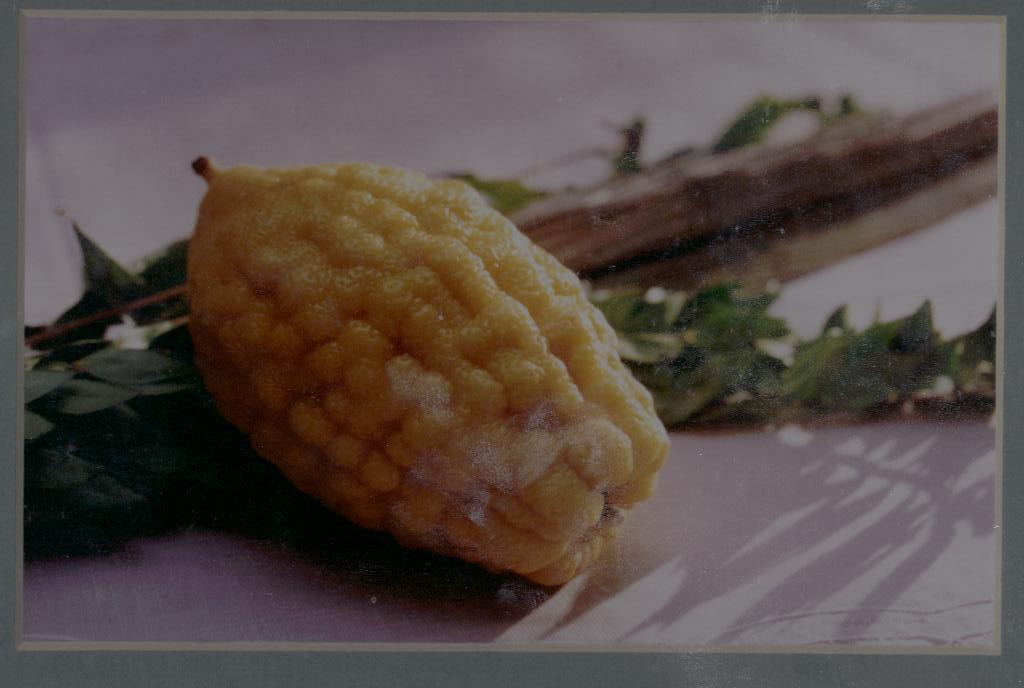
As I build my Sukkah every year I think about the fact that during the year it’s not so easy to control what comes in and leaves our homes. Media, pop culture, conversations on the school bus… you get the idea. On Sukkos we have an opportunity to control what comes in our own Sukkah, our daled amos. This is one of the reasons I love Sukkos. It’s a ‘back to basics’ Yom Tov.
It’s us, our family and friends, our Sukkah, and Hashem dwelling with us. We strip away all pretense and materialism. I could not think of a better way to really start my year off. Have a Sukkos full of simcha!